
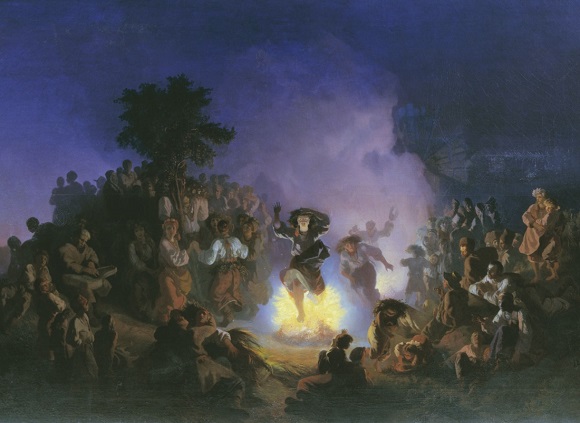
It’s time to finish up and put out the fire. Waken your little ones, and we’ll head home. The children rose reluctantly, squinting their sleepy eyes and huddling close to the embers of the hearth. The old man gazed at them with love, and his tender Slavic heart trembled. For he thought that as long as there were young ones who kept the memory of the ancient gods alive, the old faith would not perish. (Jakub Bobrowski, “Slavic Mythology”)
Echoes of ancient Slavic beliefs remain lost in the mists of history. A thousand years of Christianity have distorted, altered, and often irrevocably eradicated ancient Slavic traditions. Nowadays, a fragmentary reconstruction of these traditions is made possible by a few written historical sources, archaeological discoveries, and the painstaking work of linguists. Even though the Slavs never developed a unified religious system, their universe was teeming with gods and demons. The names of many of them have survived among us to this very day!
Svetovid
Svetovid, also known as Svantovit, presumably occupied a leading position in the pantheon of Slavic deities. Literally, his name signifies “holy victor.” Considered the god of harvest and war, he safeguarded the Slavs’ security, prosperity, and crops. He was regarded as a protector by both Slavic warriors and farmers.
Svetovid, the god of the land of Rügen, took the most prominent place among all the Slavic gods: for he distinguished himself more through his victories and was more powerful than the others in his prophecies. Therefore, in our time, not only the land of Wagria, but all the Slavic lands paid him an annual tribute, acknowledging him as the god of gods. (Hemhold, “Chronicle of the Slavs”)
Svetovid was a four-headed god, and his attributes were a cornucopia and a sword. Svetovid’s most significant shrine was located in Arkona on the island of Rügen. A wooden temple was erected in the central part of the city, housing a massive statue of the four-headed god. Svetovid wielded the horn, and nearby there were a bridle and saddle dedicated to him, as well as a stable housing a sacred white horse. Svetovid himself was said to ride it. The sanctuary was administered by priests known as the Drzewidzi. Each year, the priests celebrated the autumn Harvest Festival, which was attended by crowds of Slavs. The festivities were accompanied by numerous feasts, banquets, games, dances, and divinations. According to tradition, the amount of honey remaining in Svetovid’s horn from the previous year was believed to indicate whether the coming year would bring a bountiful harvest or a poor one. A large kolache was also sacrificed at the deity’s feet, with the hope that next year’s harvest would be even more abundant. The success or failure of planned military campaigns, in turn, was said to be determined by the behavior of the divine horse. A priest would lead the steed through a narrow tunnel formed by two rows of spears. Should the horse knock over any of them, it foretold future defeat. Every resident of Rugia was required to offer the deity a single coin once a year. War booty and votive offerings from throughout the Slavic world were also brought to Arkona. Everything was gathered into an impressive treasury, guarded by 300 horsemen. The decline of Arkona and the cult of Svetovid was brought about by the Danish invasion led by King Waldemar II. On June 15, 1168, the Danes plundered the Rugian temple and destroyed the statue of the Slavic god.

Svetovid. Source: Marek Hapon/Mhapon, CC BY-SA 4.0, Wikimedia Commons
Perun
Perun, also known as Perkūnas, Porevit, or Porovit, was the Slavic god of lightning, fire, and the sky. The name of this warlike god was derived from the word *prać*, meaning “to beat”. He was worshipped throughout the Slavic world, particularly in Rus’.
There, among very old trees, we surrounded sacred oaks dedicated to Porevit, the god of that land, enclosed by a courtyard bordered by a fence carefully constructed of wood and featuring two gates. For in addition to the household gods, household idols, and idols—of which every city abounded—this was a sacred place for the entire country and had its own high priest, ceremonies, and various sacrificial rites. (Hemhold, “Chronicle of the Slavs”)
Among Perun’s attributes one could mention thunder, an eagle, and an axe, and his sacred tree was the oak. The god was worshipped primarily in oak groves, which were supposed to include at least one ancient oak tree. The unquenchable sacred fire was kept burning in honor of Perun, watched over by priests. The Prussians called them Criverots, and the Lithuanians called them Wajdelots. They were the ones who divined the future from the sacred fire. By gazing into its flames, they could determine whether a person stricken by illness would survive. If, in the evening, they noticed the shadow of the sick person facing the fire, it meant that the person would live. However, if the shadow appeared with its back to the fire, death awaited the sick person. Perun’s sacred grove was not to be defiled by human blood; thus, people facing death often sought refuge there. The most magnificent oak grove of Perun (Pro) in the Elbe region was destroyed in 1156 on the orders of Hemhold, the Bishop of Lübeck. Perun’s cult was most widely practiced in Lithuania and among the Prussians. The last Perkunas shrine in Vilnius was not dismantled until the 15th century. From then on, belief in the ancient god of thunder merged with the cult of St. Elijah.
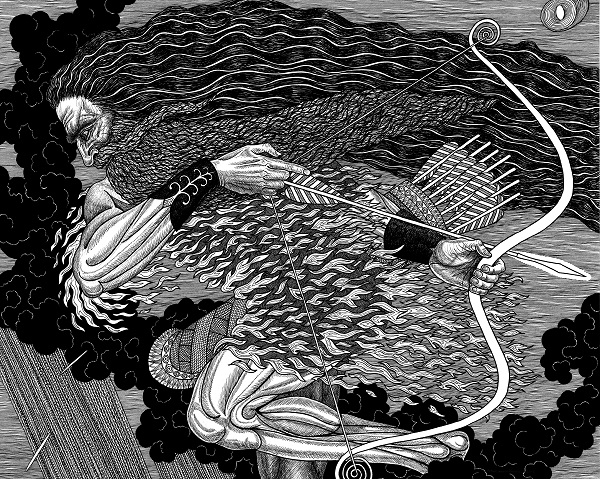
Perun. Source: Marek Hapon/Mhapon, CC BY-SA 4.0, Wikimedia Commons
Swarog
Swarog, likely also worshiped as Svarozhits, Dazhbog, or Radegast, was the Slavic god of the sun, the patron of fire and blacksmithing. His name was known throughout the Slavic world, and his cult flourished particularly among the Western Slavs.
Human-made gods with terrifying helmets and armor tower above, each with a name engraved on the underside. The first among them is named Svarozhits and is especially revered by all pagans. (Thietmar, “Chronicle”)
The most prominent temple of Swarog was located in Radogoszcz, the main stronghold of the Redar tribes. It included a stable housing a sacred black horse. The temple treasury preserved numerous precious items and the battle standards of the Lutici tribes. Everything was supervised by the priests of the god Swarog, who used the sacred horse for divination. Despite the fact, that the temple in Radogoszcz was plundered and destroyed in 1069 by Bishop Burchardt, the cult of Swarog did not end there. The valiant Redarians rebuilt the temple twice more, eventually moving it to an island on the lake. Faced with the constant threat of German raids, the cult of Swarożyc underwent changes. The ancient Slavic god came to be known as Radegast, whose attributes included a double-edged axe, a bird-shaped helmet, and the black head of a bull. This form of the cult of the god of fire persisted until the final fall of Radogoszcz in the mid-12th century.
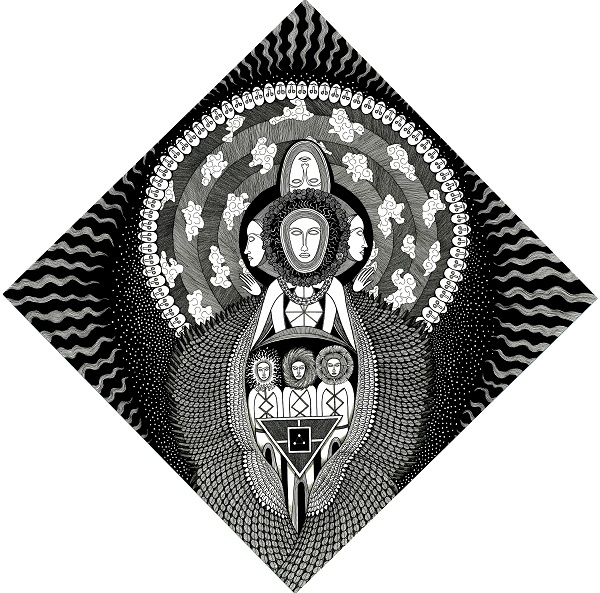
Swarog. Source: Marek Hapon/Mhapon, CC BY-SA 4.0, Wikimedia Commons
Triglav
Triglav, also known as Trzygław, was a Slavic god whose cult was widespread among the Pomeranian tribes. Triglav’s most prominent temples were located in Szczecin and on the island of Wolin.
Szczecin […] included three mountains within its boundaries, of which the middle and highest one—dedicated to Triglav, the supreme Slavic god—featured a three-headed statue with its eyes and mouth covered by a golden veil; Meanwhile, the priests serving these deities claimed that the supreme god ruled over three realms—namely, heaven, earth, and hell. As for his face being covered, it was as if, by not seeing or hearing human sins, he might overlook them. (Ebon, “The Life of St. Otto of Bamberg”)
The animal dedicated to the three-headed god was a black horse. Whenever local tribes prepared for a military campaign, the behavior of the divine horse was supposed to predict the outcome. Priests would arrange nine spears on the ground, spaced slightly apart, and then lead the horse through them three times. The campaign was considered destined for victory only if the horse did not knock any of the spears over with its hooves. Upon completion of military operations, one-tenth of the spoils—gold, weapons, precious stones, and animal horns—were sent to the treasury of Triglav’s temple. The temple of the Slavic god in Szczecin ceased to exist due to the actions of St. Otto of Bamberg in the mid-12th century. Following the destruction of Triglav’s sanctuary, his three silver-plated heads were sent to Rome to Pope Callixtus.
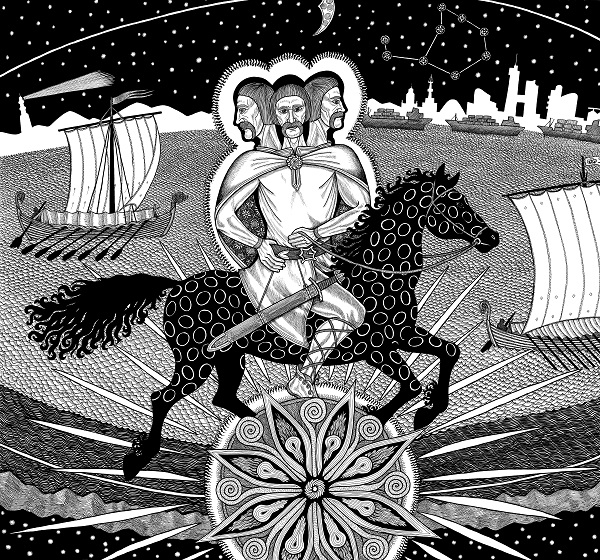
Triglav. Source: Marek Hapon/Mhapon, CC BY-SA 4.0, Wikimedia Commons
Veles
Veles, also known as Volos, was a Slavic god worshiped in Rus’ as the god of cattle and minstrels, and the ruler of the realm of the dead.
Emperors Leo and Alexander, concluding peace with Oleg, consented to pay tribute and pledged an oath; they themselves kissed the cross, and called upon Oleg and his men to take an oath; these, according to the Rus’ custom, pledged an oath by their swords and by Perun, their god, and by Volos, the god of cattle. (Nestor, “The Annual Chronicle”)
Veles reigned over Nava—the land of the dead, the afterlife. The Slavs believed it was located somewhere far away, beyond the great sea. Veles’s name would be added to spells and oaths to strengthen their power.
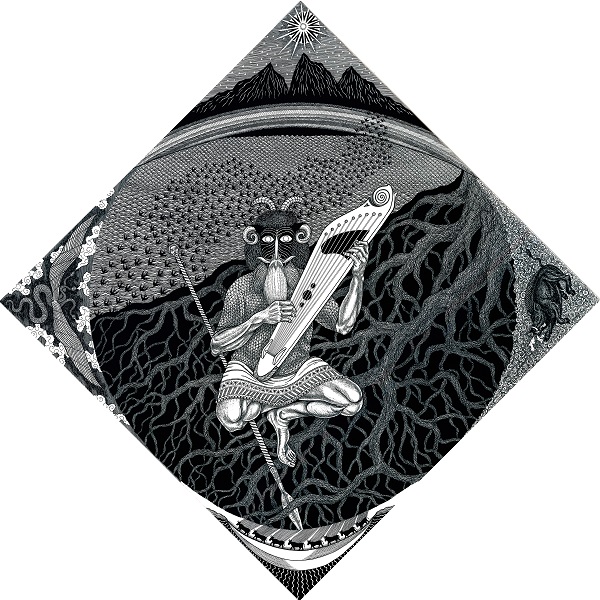
Veles. Source: Marek Hapon/Mhapon, CC BY-SA 4.0, Wikimedia Commons
Yarilo (Jarylo /Jarowit)
Yarilo was a Slavic god of spring. In Rus’, he was worshipped under the name Jarylo.
If it weren’t for Yarilo‚s kind, not a single blade of grass would see the sun, nor would a single good seed sprout. (Belarusian proverb)
One of the attributes of the god Yarovit was the enormous golden shields, which adorned his temples. The only people allowed to touch them were the priests, who would offer blessings with them to warriors setting out on military campaigns. They celebrated Yarovit’s festival in the spring. Houses were decorated with colorful flags at that time. Numerous pagan customs celebrating the reawakening of life in spring were later adopted by Christianity. In Rus’, belief in the spring god Yarilo merged with the cult of St. George.

Yarilo. Source: Marek Hapon/Mhapon, CC BY-SA 4.0, Wikimedia Commons
Rugievit
Rugievit was a war god and the patron deity of the Slavic Rani tribe, which inhabited the island of Rugia.
He was depicted with seven human faces, all gathered beneath a single crown; the artist equipped him with seven different swords, which hung in their sheaths on a single belt, while he held an eighth sword extended in his right hand. (Saxo Grammaticus, “Chronicle”)
Rugievit’s temple used to be located in Korzenica in the island of Rügen. The bird sacred to the deity was the swallow. Its nest used to be found in a hollow carved into the oak statue of Rugievit. At its feet, sacrifices were offered and war councils were held. In 1168, Rugiewit’s temples were destroyed by the troops of the Danish bishop Absalon, causing the cult to soon fade away.
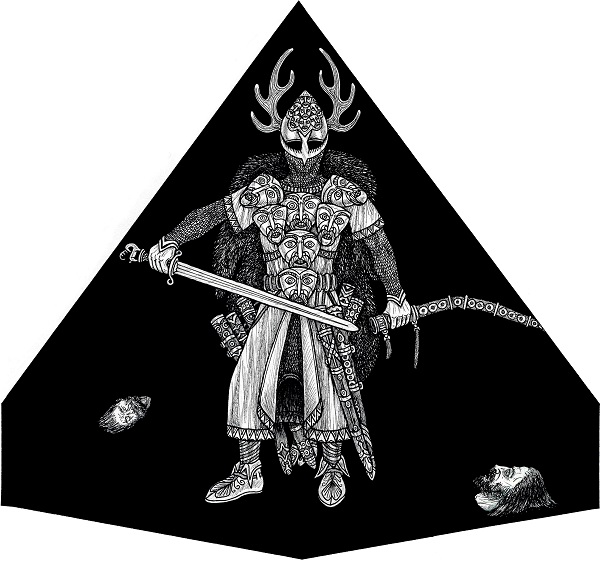
Rugievit. Source: Marek Hapon/Mhapon, CC BY-SA 4.0, Wikimedia Commons
Chors, Mokosh, and Siemargl
Chors, Siemargl, and Mokosh were deities undoubtedly worshipped by the Eastern Slavs, and perhaps by other Slavic tribes as well.
Thus Vladimir himself began to rule in Kyiv, and he erected statues of idols on the hill behind the royal palace: a wooden Perun with a silver head and a golden mustache, as well as Chors, Dazhbog, Stribog, Siemargl, and Mokosh. And they offered sacrifices to them, calling them gods, bringing their sons and daughters in sacrifice to the demons and defiling the land with their offerings. (Nestor, “Primary Chronicle”)
Chors was very likely the god of the moon, the ruler of the night. Mokosh was considered the protector of women, the guardian of their household chores, and the goddess of sheep. Still, many centuries following the arrival of Christianity, women in Rus’ used to leave a lock of wool next to their shears overnight, dedicated to the goddess Mokosh. With regard to the god Siemargł (Simargł, also Semargł) the lack of sources attesting to his realm forces us to rely on the etymology of his name. According to this, it is generally assumed that he was the god of farmers and the protector of the home and farmstead.
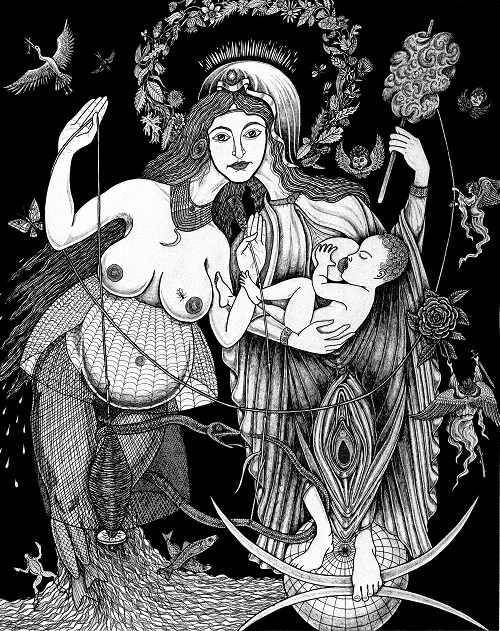
Mokosh. Source: Marek Hapon/Mhapon, CC BY-SA 4.0, Wikimedia Commons
Chernobog and Belobog
Bielobog and Chernobog were Slavic deities who represented opposites. It is assumed that one—the white god—symbolized the concept of good, while the other—the black god—symbolized evil.
For they believe that while good fortune originates from the good god, misfortune has its foundation in the evil one. And that is why they call the evil god Diabol or Chernobog in their language—that is, the black god. (Hemhold, “Chronicle of the Slavs”)
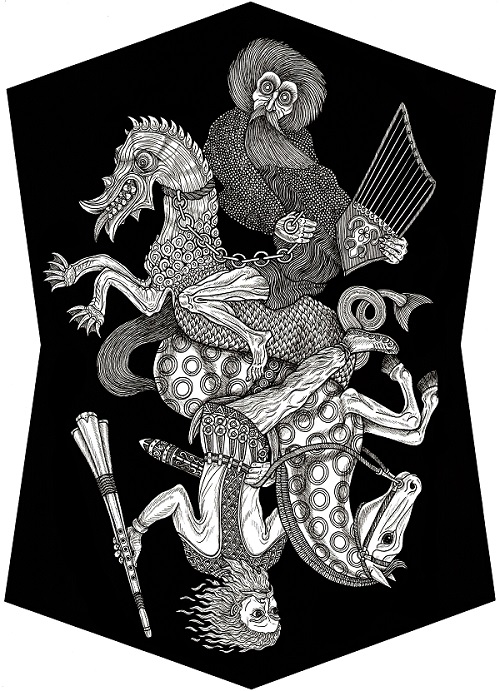
Chernobog and Belobog. Source: Marek Hapon/Mhapon, CC BY-SA 4.0, Wikimedia Commons
Demonic Beings
Apart from pan-Slavic, regional, tribal, and ancestral deities, the Slavs also worshipped countless demons. Each of these was associated with a specific element of nature or aspect of daily life. Notable examples include:
Demons of the four elements— demons of water, fire, and wind;
On Kupala Night 2022
Piotr Worwa
Bibliography:
Baranowski Bohdan, W kręgu upiorów i wilkołaków. Demonologia słowiańska [In the Circle of Ghosts and Werewolves], Replika, Poznań 2019.
Pełka Leonard, U stóp słowiańskiego parnasu. Bogowie i gusła [At the Foot of the Slavic Parnassus: Gods and Superstitions], Replika, Poznań 2021.
Title image: Ritual fire jumping in a painting by Ivan Sokolov from 1856. Source: Wikimedia Commons